
Khiva in one day: Itchan Kala, madrasas & craftsmen
The only fully preserved medieval city in Central Asia. Mosques, palaces, minarets and living craftsmen's workshops — all within the 650×400 m walled inner city.
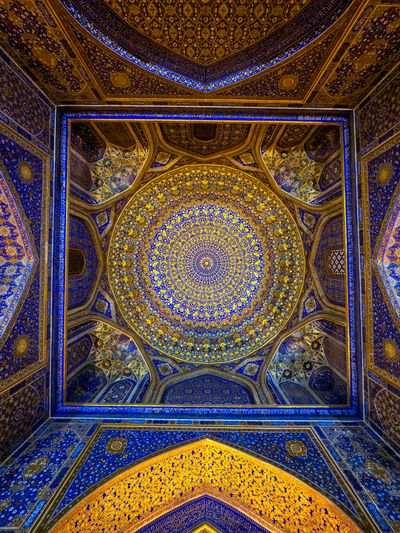
 Khiva
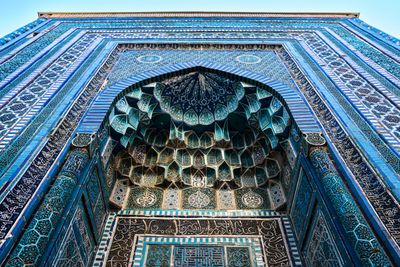
Khiva
Khiva tour with XANAKA
A local team, licensed guides and time-tested routes.
UNESCO sites
Every monument on the route is a UNESCO World Heritage site.
Licensed guide
A state-certified professional with deep knowledge of local history.
Entrance tickets
Included — no queuing at ticket offices.
Hotel pick-up
We pick you up and bring you back: hassle-free logistics.
What we visit in Khiva
Everything in Itchan Kala is compact — 5–10 minutes on foot between sights.
Muhammad Amin Khan Madrasa + Kalta Minor · 09:30
19th c. The largest madrasa in Khiva + an unfinished minaret with turquoise glazed tiles.
Juma Mosque · 10:15
213 unique carved columns spanning the 10th–19th centuries — no two alike.
Wood-carving workshop · 11:00
Multi-generational masters carving mulberry wood.
Tash-Hauli Palace · 11:30
Harem, courtroom and throne room of a 19th-century khan — the finest tilework in Khiva.
Islam Khoja Minaret · 13:30
57 m tall — the highest point with panoramic views over the city and the Kyzylkum Desert.
Weavers and ceramics workshops · 14:30
Silk carpets, copper-chasing and Khorezm ceramics.
6–8 hours in Khiva · hour by hour
Times are approximate. The itinerary is flexible — we can swap sights on request.
The guide meets you at the main western gate. Itchan Kala is a living city with 2,500 residents — the entire area is just 650×400 m.
- UNESCO World Heritage since 1990
- Everything is close — 5–10 min. on foot between sights
The largest madrasa in Khiva (125 cells). Next to it stands Kalta Minor: the khan died and construction stopped at 26 m.
- The widest minaret in Khiva: 14.2 m at the base
- The turquoise glazed tiles are almost entirely intact
213 wooden columns from different centuries — no two are alike. It stays cool inside even in the height of summer.
- The oldest columns date from the 10th–11th century
- The interior feels like a forest of wooden pillars
A 3rd- or 4th-generation master crafts doors, columns and jewellery boxes. Traditional Khorezm ornament is purely geometric.
- Handmade jewellery boxes — a great souvenir
Three courtyards: the harem (163 rooms), court of justice and reception hall. The finest tilework in all of Khiva.
- The harem courtyard is the most richly decorated
- Carved plaster and glazed tiles — exceptionally delicate handwork
A cosy teahouse inside the fortress walls. Khorezm plov is cooked differently — the rice is prepared separately.
- Mantyshy — Khiva-style dumplings
- Lagman noodle soup and shurpa — prepared the local way
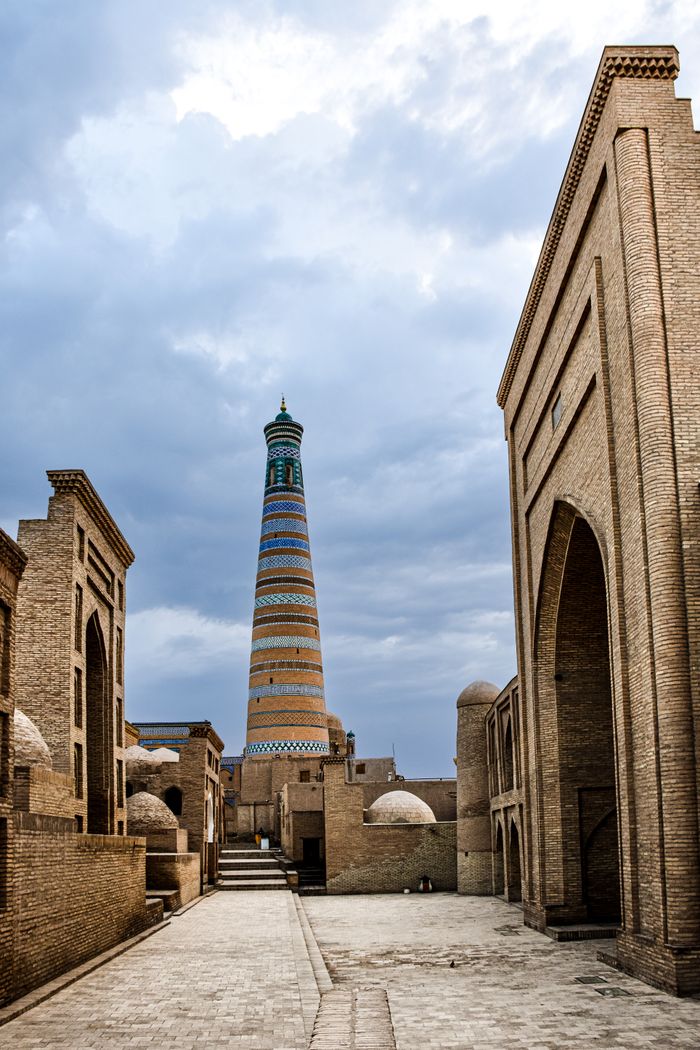
The tallest minaret in Khiva (built 1910), 118 steps. From the top terrace you see all of Itchan Kala and the Kyzylkum Desert.
- The last major monument built under the khans
- The climb takes ~5 minutes — 118 steps
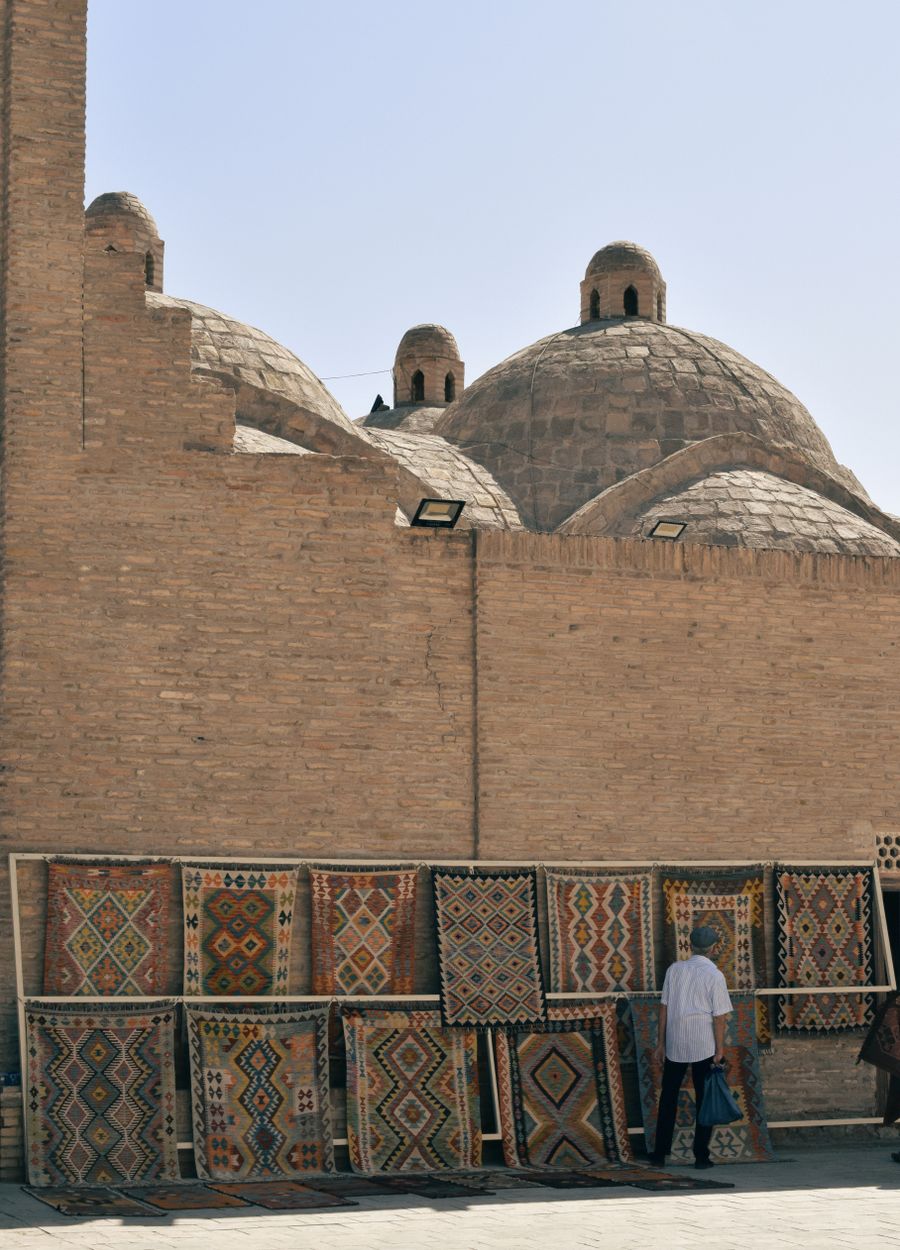
Hand-knotted carpets with geometric patterns — each takes three months or more to complete. Then ceramics and copper-chasing.
- Handmade vs machine-made carpets — your guide will show you how to tell the difference
- Khorezm ceramics: terracotta clay with blue ornament
The mausoleum of a 13th–14th-century folk hero. A blue dome, a quiet courtyard and the poet's verses on the walls.
- The khans of Khiva all wished to be buried beside him
What you will see
Itchan Kala
The only fully preserved medieval city in Central Asia, UNESCO since 1990.
Kalta Minor Minaret
An unfinished 19th-century minaret — the widest and the "shortest" in Khiva.
Juma Mosque
213 unique carved columns spanning the 10th–19th centuries — no two alike.
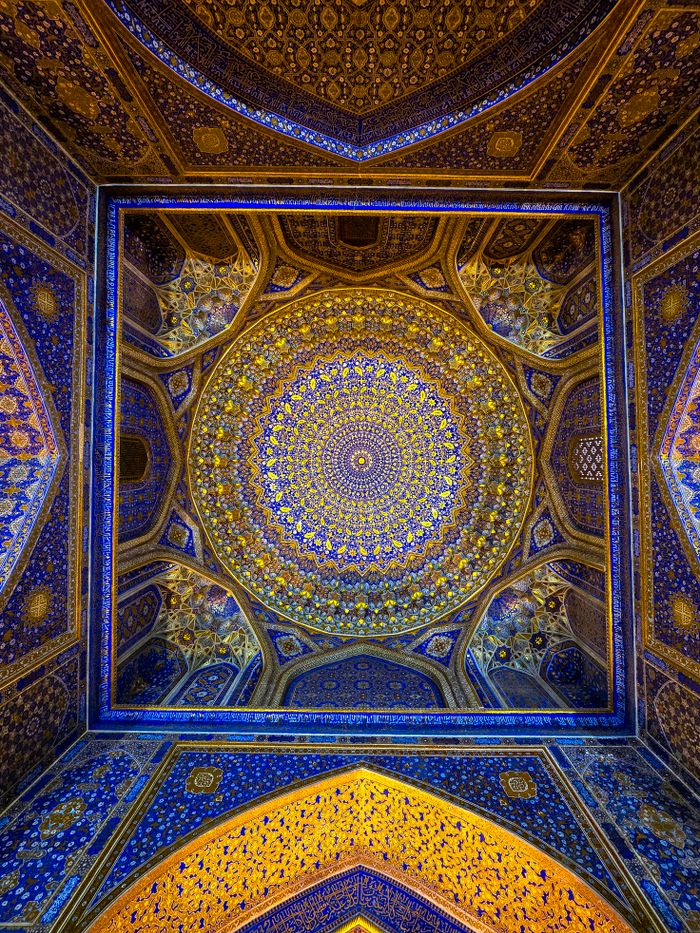
Tash-Hauli Palace
Harem, courtroom and throne room of a 19th-century khan — the finest tilework in Khiva.
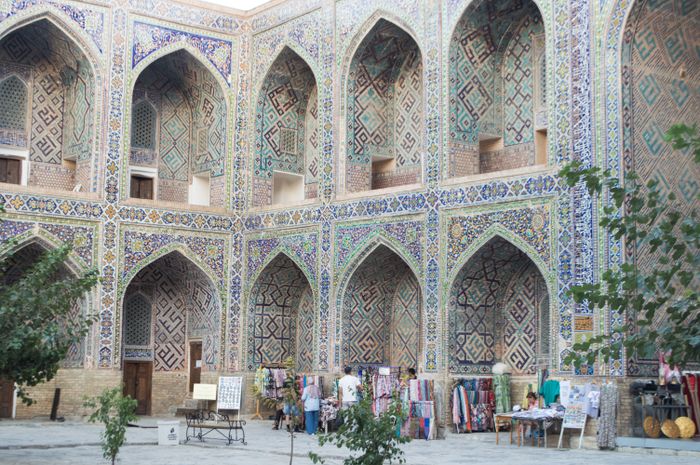
Islam Khoja Minaret
57 m above Khiva — panoramic views of the inner city and the Kyzylkum Desert.
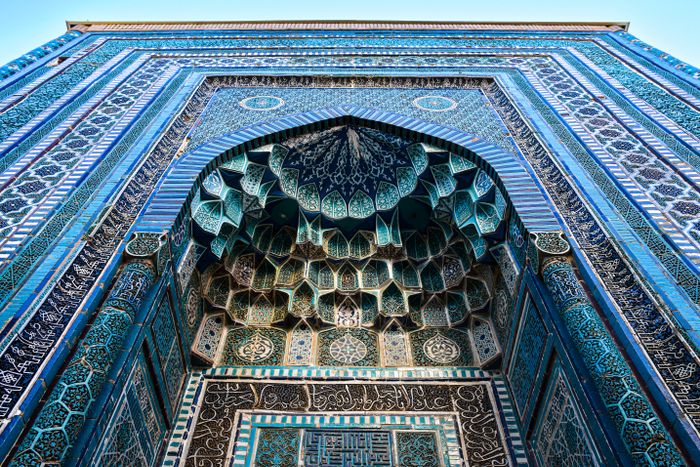
Craftsmen's workshops
Wood carving, silk carpets, copper-chasing and Khorezm ceramics.
What is included in the price
Included
- English-speaking licensed guide (6–8 h)
- Comfortable transport around the city
- Entrance tickets to all sites
- Pick-up at your hotel
- 24/7 support in English
Not included
- Meals and drinks
- Tastings and workshops (on request)
- Personal expenses and souvenirs
- Travel insurance
- Flights Tashkent–Urgench (we can assist)
Price from $80 / person for groups of 4+ · Private tour on request
Pick a day that suits you
Send a request — we confirm the date within 2 hours. Private tour or group — your choice.
What travellers say
"The guide was a true professional. Khiva left an overwhelming impression on us. Highly recommend!"
“I booked just a day in advance. They met us at the hotel at 9:00 sharp. A packed itinerary, yet never rushed. A wonderful day!”
“A private tour for our family. The guide adapted to our pace — the kids were never bored!”
Frequently asked questions
Citizens of 90+ countries (including the EU, UK, Japan and South Korea) enjoy visa-free entry for up to 30 days. Most other nationalities can get an e-visa online in 2–3 days — we can advise on your case.
Fly from Tashkent to Urgench (~1 hour), then transfer to Khiva (~35 min). We can assist with flight bookings on request. There is also an overnight train (~14 hours).
Itchan Kala has no separate market — all commercial trading takes place outside the walls. Instead, we visit living workshops inside the fortress: wood carving, carpet weaving and ceramics. You can buy souvenirs directly from the masters.
Guide, combined entry ticket to Itchan Kala, tickets to the madrasa, palace and minaret. Workshop visits are free; any purchases are at your discretion.
April–May and September–October are ideal. Summer (July–August) can reach +42 °C but draws fewer tourists. Winter is cool, yet all sites remain open.
Book the Khiva tour
Guide, transport and tickets — all included. 6–8 hours.
Get a free consultation
Fill in the form — we will get back to you with a personal offer.
You may also like
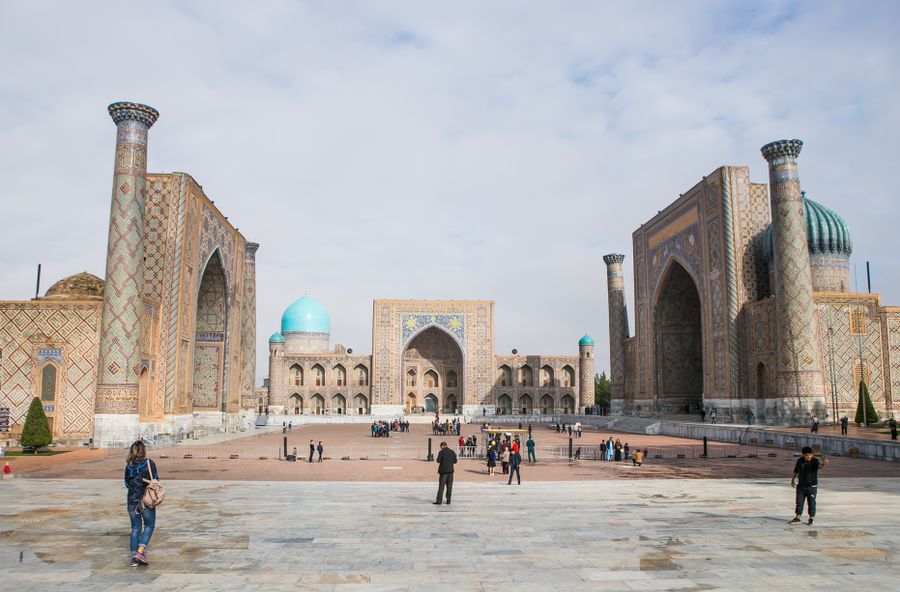
Samarkand · 1 day
Registan, Gur-Emir, Shah-i-Zinda and the Meros paper mill.
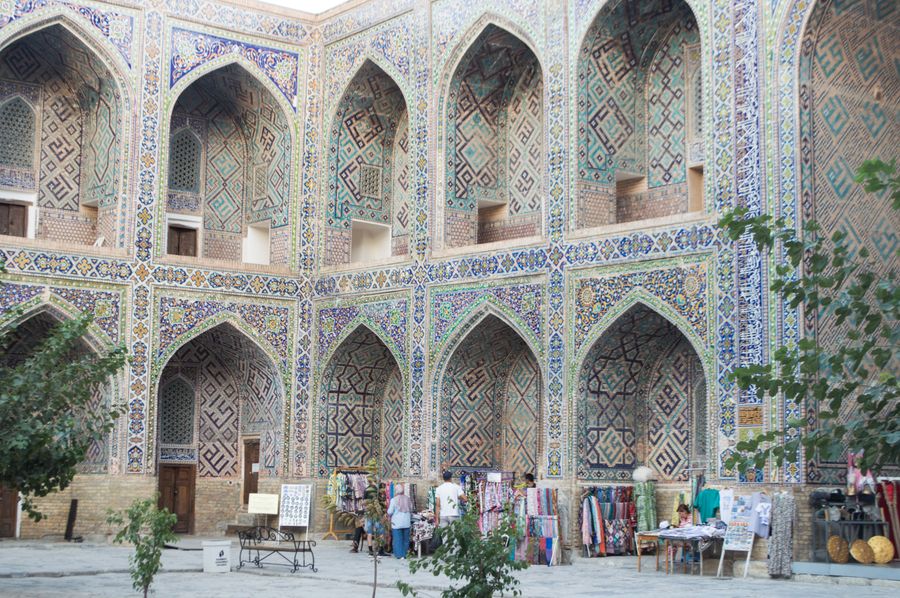
Tashkent · 1 day
Hazrati Imam, Chorsu Bazaar and the metro — the capital through local eyes.
8 days · classic tour
Khiva, Bukhara, Samarkand and Tashkent — all four cities.